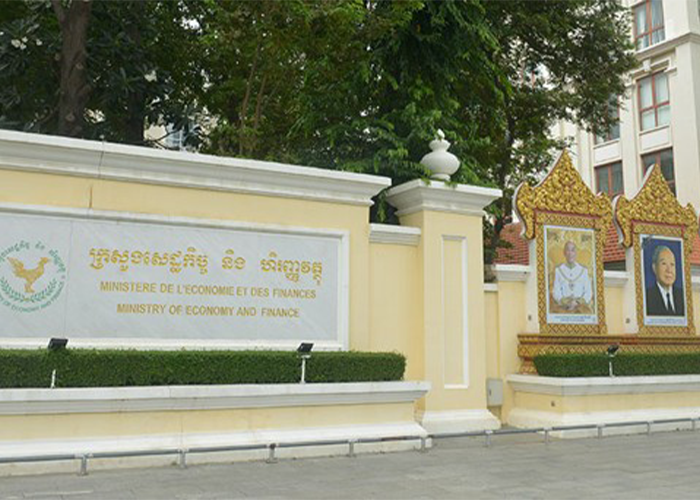
Khmer Times News: Cambodia’s total public debt stood at $13.30 billion at the end of the first quarter of 2026, with the government maintaining that the country’s debt remains sustainable and at low risk of distress.
According to the latest public debt bulletin issued by the Ministry of Economy and Finance (MEF) on Wednesday, external debt accounted for 96 percent of the total, or approximately $12.70 billion, while domestic debt represented four percent, or $596.03 million. Of the external debt, 59 percent was owed to bilateral development partners and 41 percent to multilateral lenders.
The debt portfolio remains diversified across major currencies, with the US dollar accounting for 48 percent of total debt, followed by Special Drawing Rights (SDR) at 17 percent, Japanese yen and Chinese yuan at 10 percent each, euro at nine percent, Cambodian riel at two percent, and other currencies making up the remainder.
During the first quarter, the Royal Government of Cambodia signed new concessional loans worth $91.92 million, equivalent to SDR 67.32 million, representing just three percent of the borrowing ceiling authorized under the national budget law. About 75 percent of the new financing came from bilateral partners, while 25 percent was sourced from multilateral institutions. The amount of newly signed loans increased by around 17 percent compared to the same period last year.
The government noted that all new loans carry highly concessional terms, with an average grant element of 32.8 percent. The funds will be directed toward priority public investment projects aimed at supporting long-term economic growth, improving productivity, and strengthening infrastructure.
Preliminary findings from the 2026 Debt Sustainability Analysis indicate that Cambodia’s debt remains well below international risk thresholds. The present value of total public debt stands at 19.2 percent of GDP, compared with the 55 percent threshold, while the present value of public and publicly guaranteed external debt is 17.9 percent of GDP, significantly below the 40 percent benchmark.
Source: https://www.khmertimeskh.com